Bring the messy input with you.
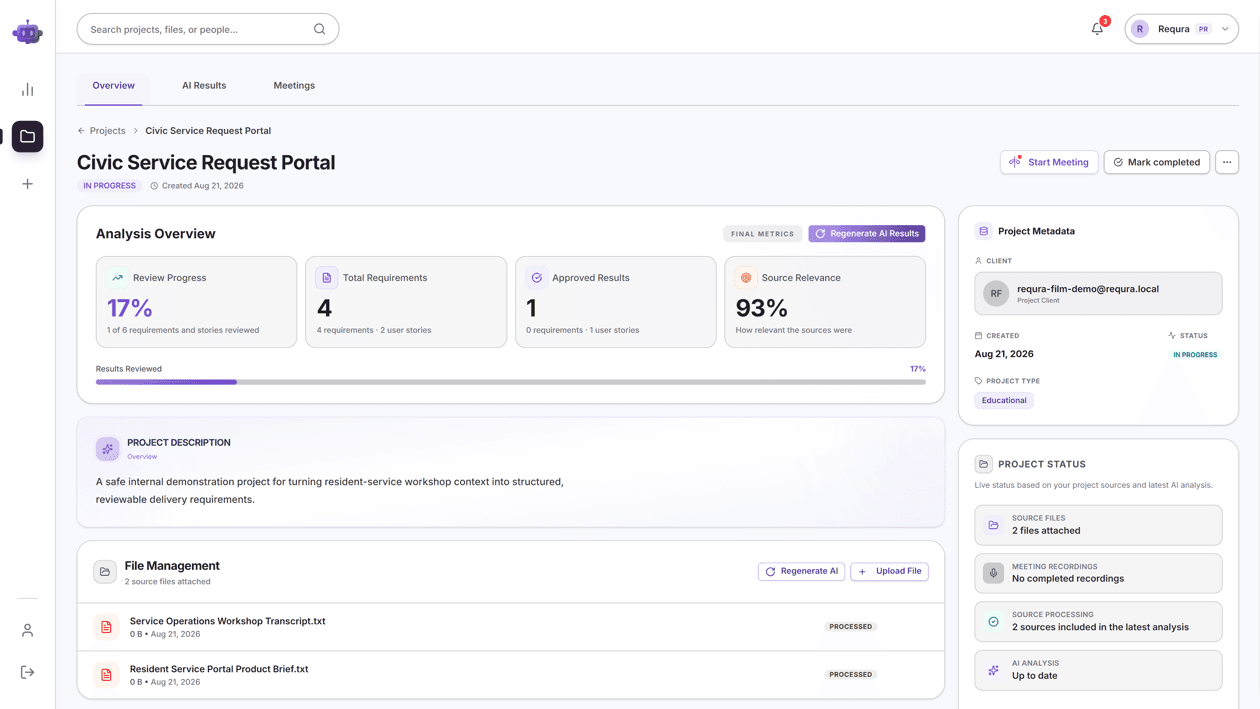
Notes, transcripts and briefs enter one workspace without pretending they already agree.
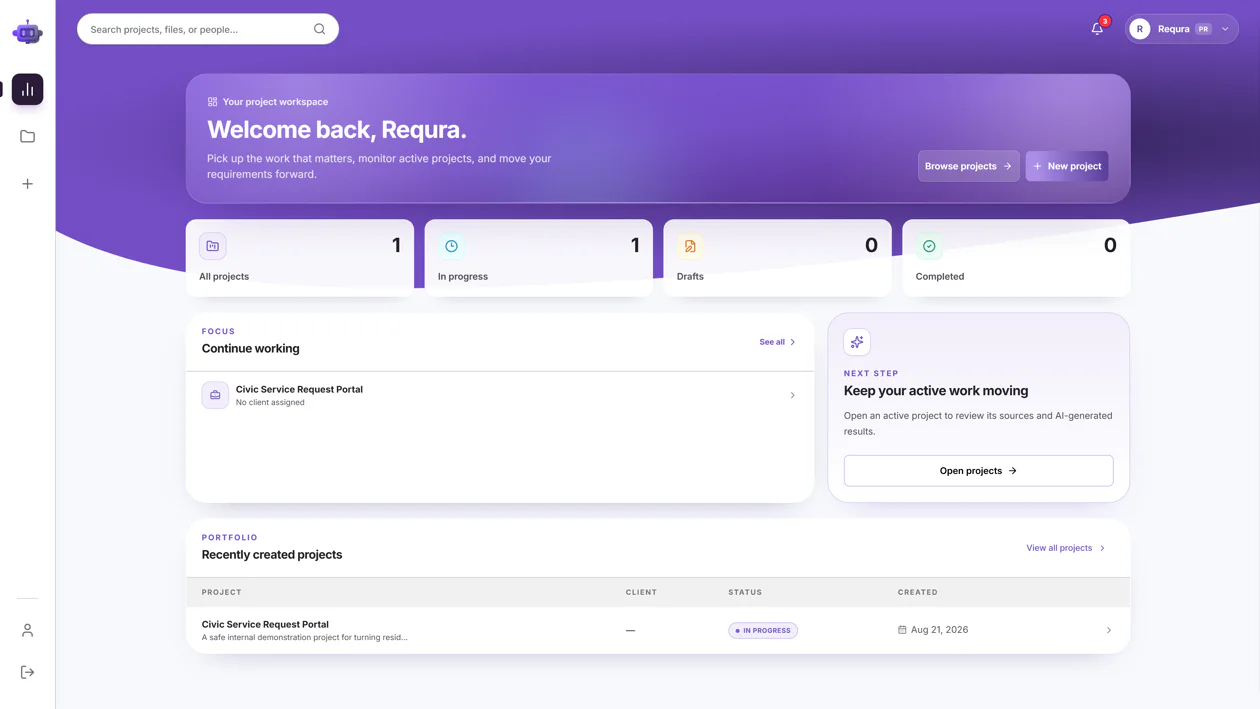
Requirements that can show where they came from—and who approved them.
The public demo uses deterministic synthetic data. No signup, private client material, or production service is involved.
Requra keeps source material, generated structure, quality signals, review, and export as explicit stages. A requirement only becomes credible when the path back to evidence stays intact.
Notes, transcripts and briefs enter one workspace without pretending they already agree.
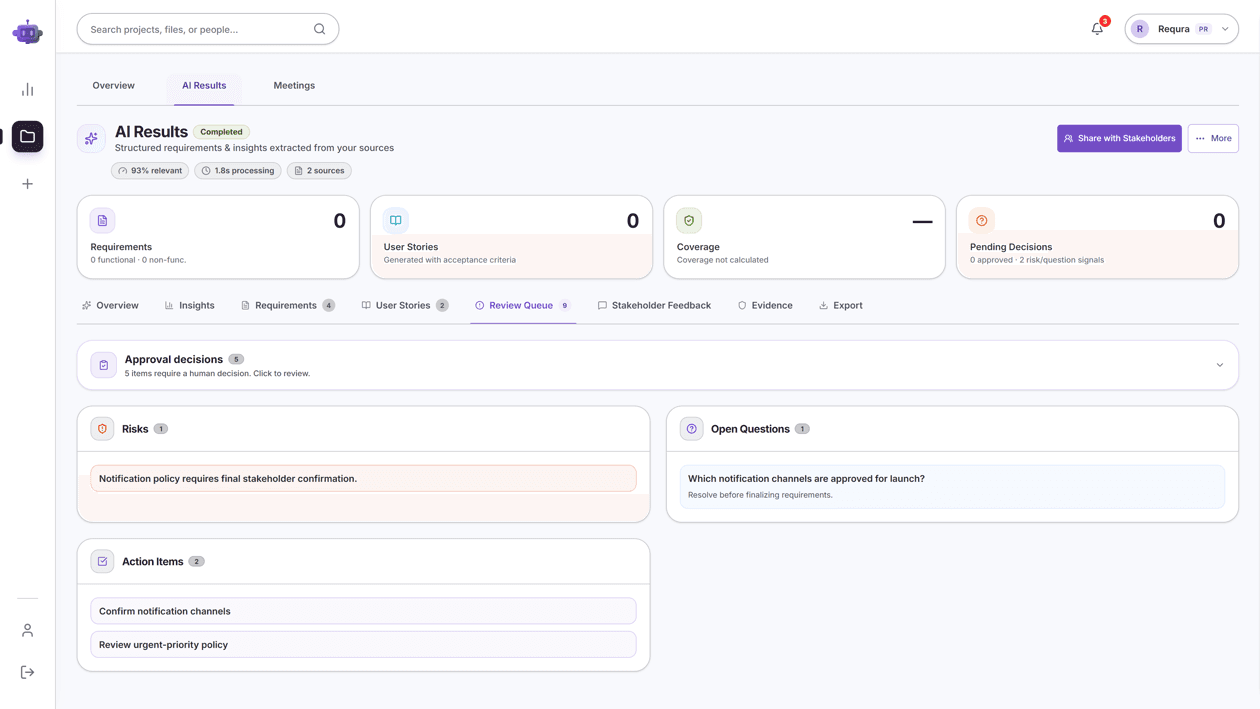
Generated requirements expose confidence, category, coverage, and the decisions that still need a person.
Citations remain inspectable beside the claim, turning review into verification instead of prompt archaeology.
Approved work moves into delivery artifacts with its audit trail and ownership still attached.
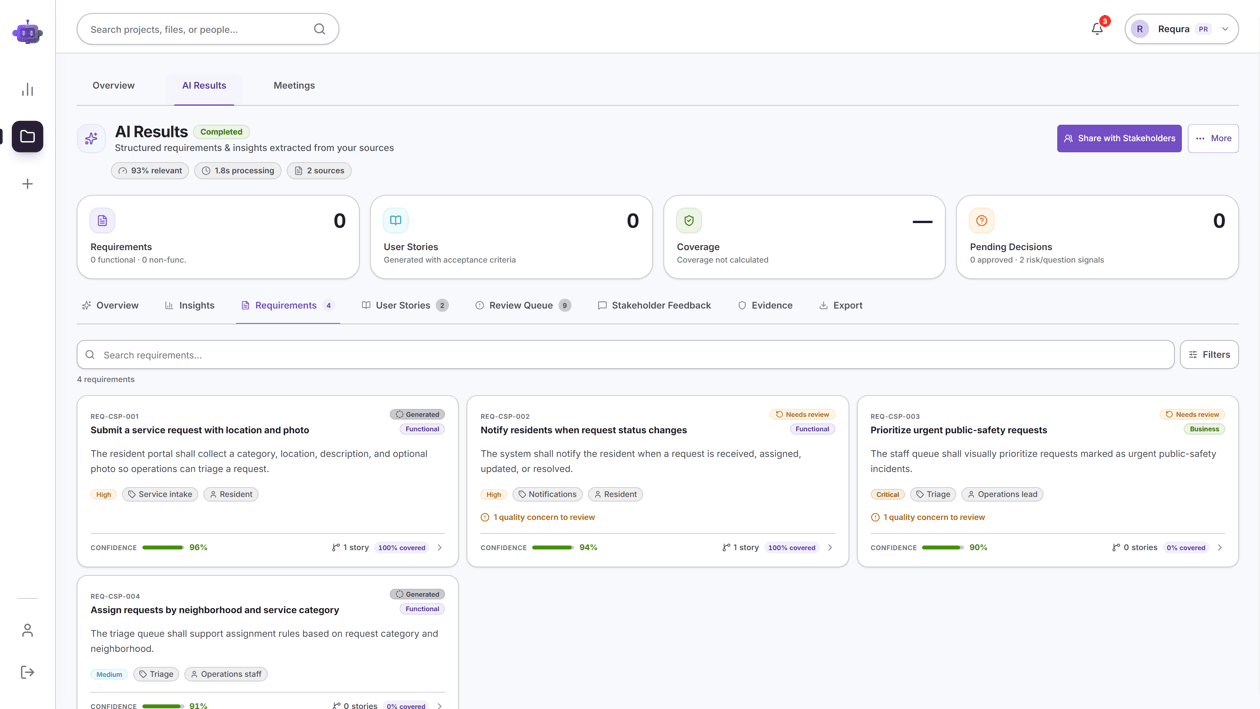
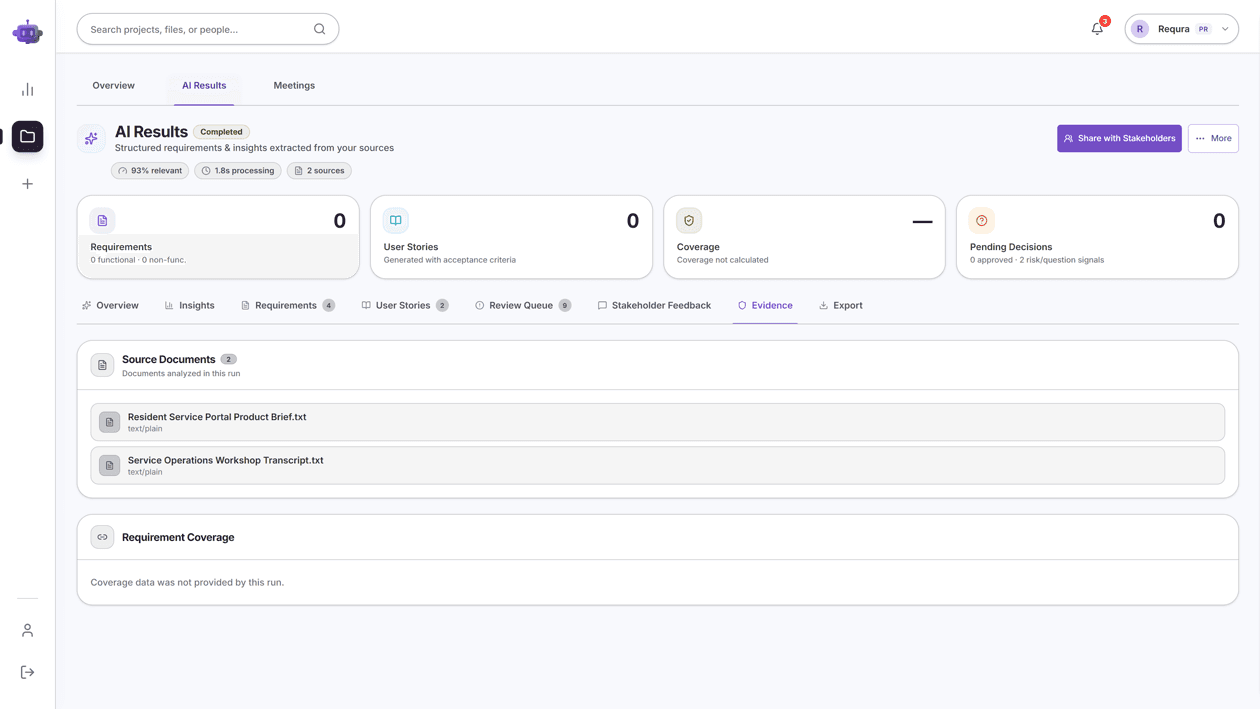
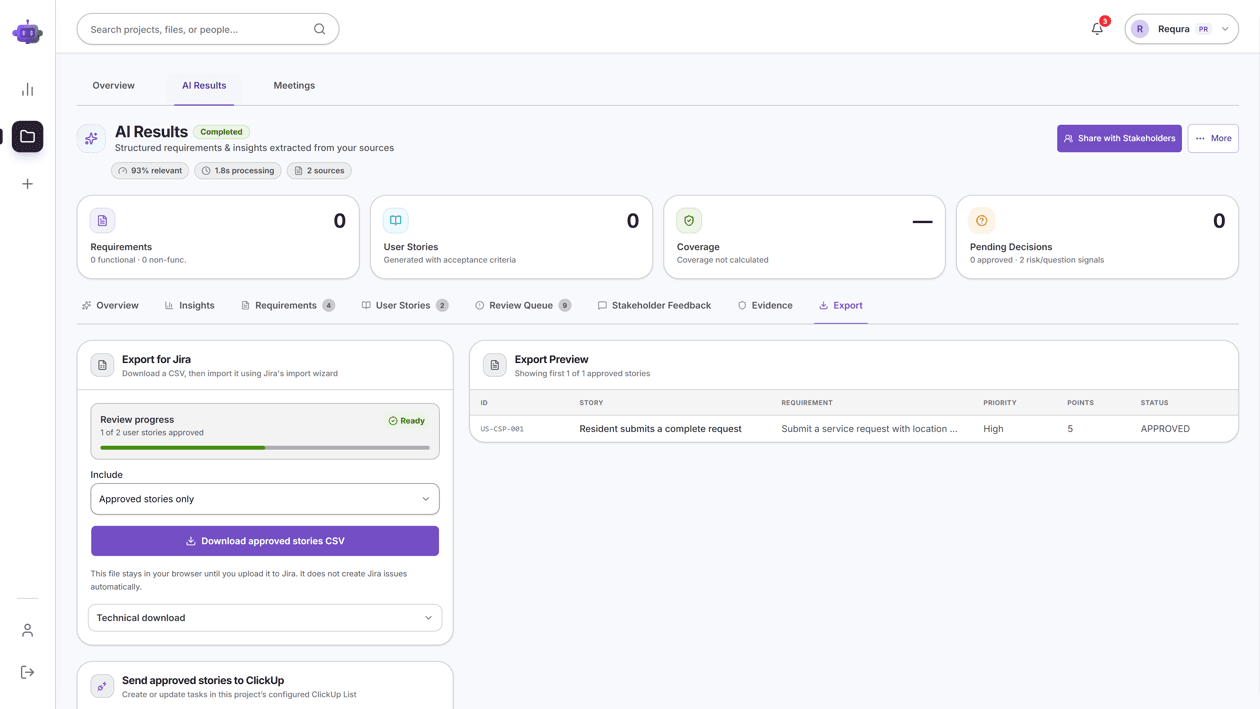
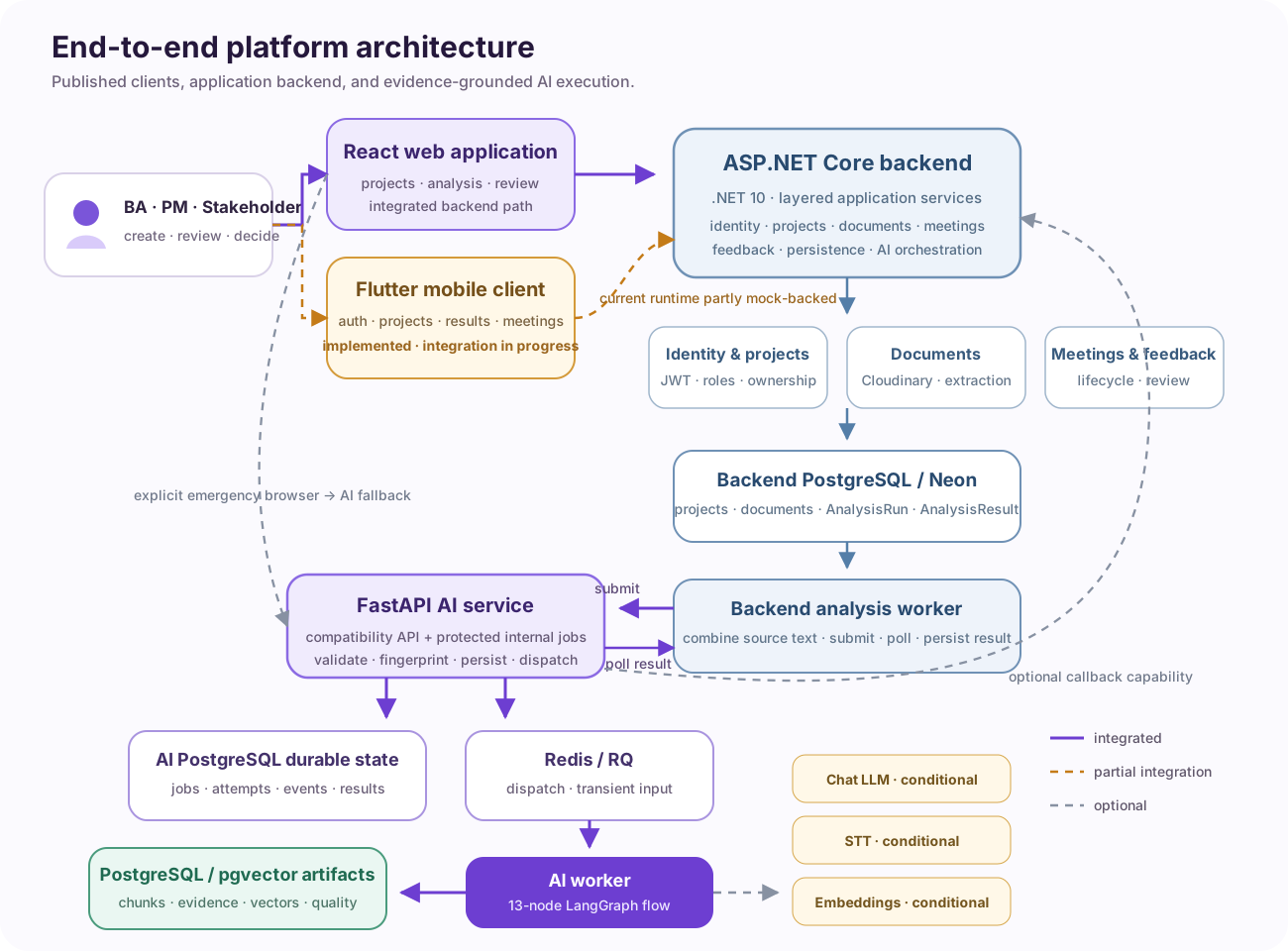
The product separates client interaction, tenant-safe APIs, extraction workers, storage, and review. The interface makes that separation understandable without exposing users to an “agent graph.”